

💌 32: The Outside Lane
Why the biggest bet you’ll ever make is on yourself.

On Saturday, I was sitting under the lights at a fashion tech summit. I had flown in from Toronto the night before. I had not slept in my own bed in a week and a half. In the span of a few days, there had been four cities, airports, mic checks, greenrooms, hotel bathrooms pretending to be glam rooms, too many unread texts, an airport matcha that tasted like punishment, and a full LAX lap in pursuit of water that did not come in plastic. No perfect little morning routine. Just the supplements still in the travel case, the suitcase still half-packed, the charger never in the bag you think it is in, and the quiet discipline of continuing to show up well when the conditions are not romantic.
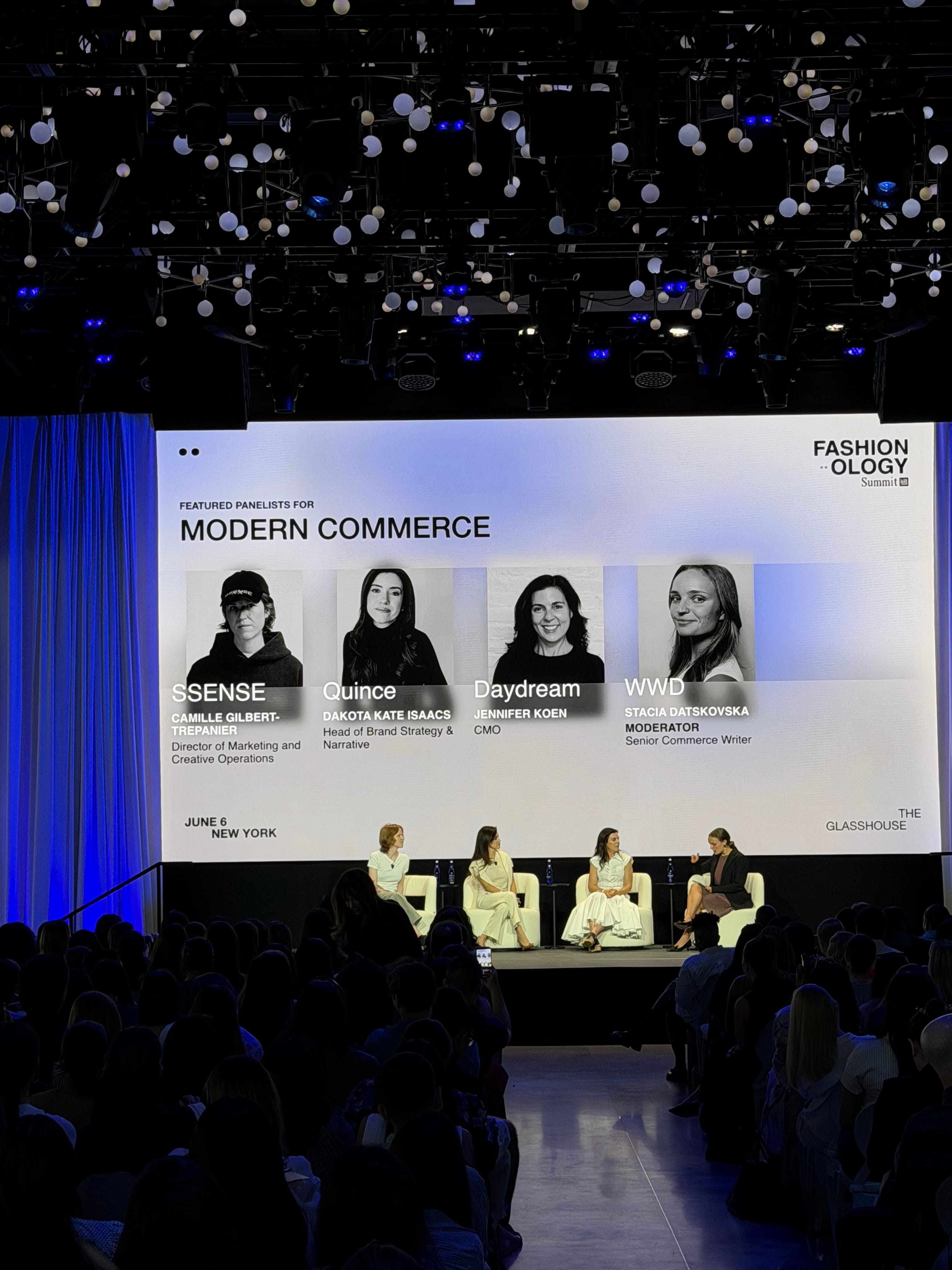
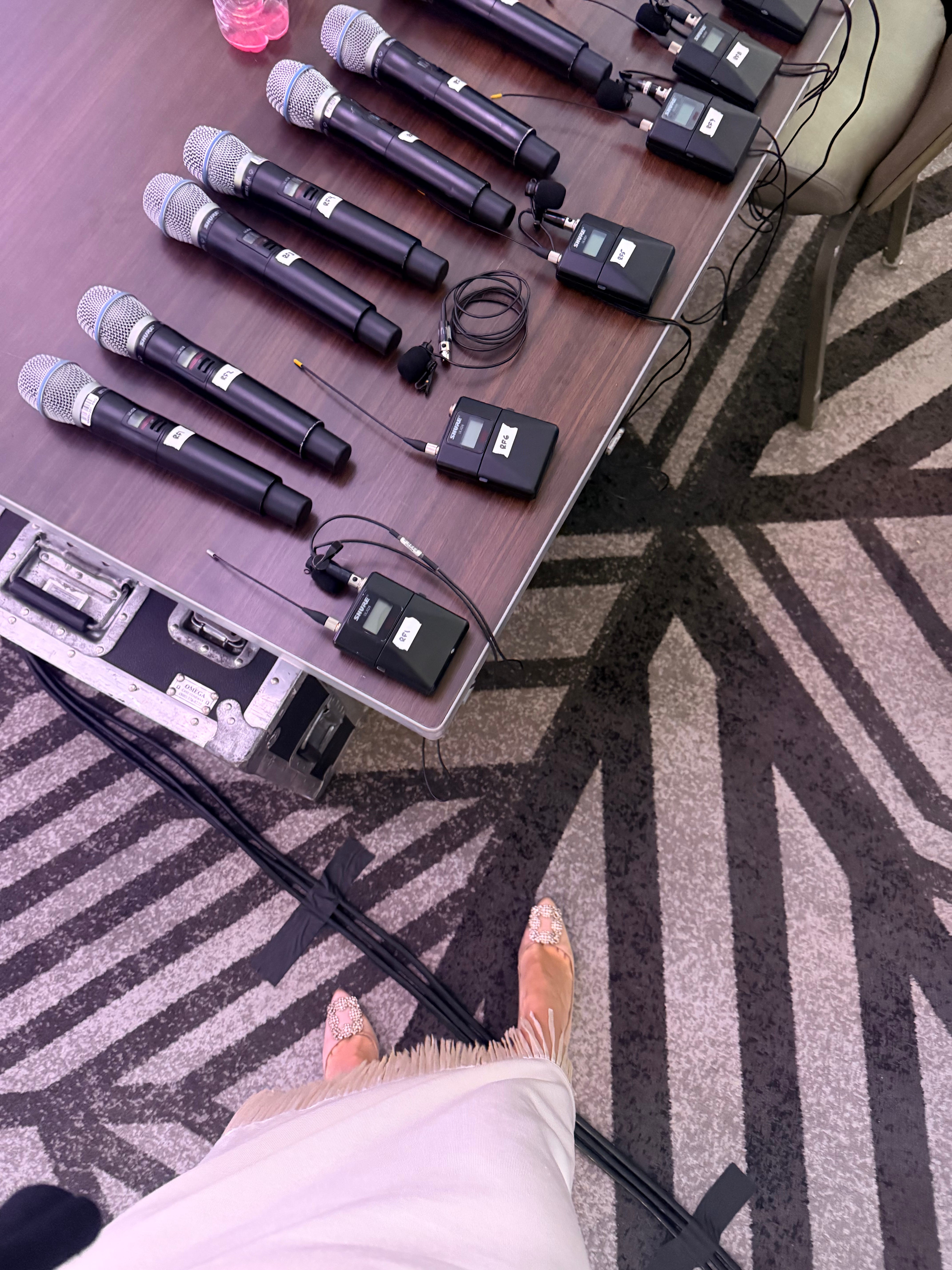
The glamorous version is cashmere, Manolos, stage lights, someone slipping you a business card as you walk offstage. The real version is all of that, plus answering emails from the backseat of a taxi, getting carsick in the stop-and-start crawl back from LaGuardia, and trying to time your lipstick touch-up between red lights.
That is the work behind the picture.
The room was full in that very specific New York way: beautiful people in good shoes, everyone with somewhere else to be, all deciding for this hour to pay attention. I walked off stage and was immediately shuffled downstairs into a greenroom for a podcast interview.
What advice would I give to young women at the beginning of their careers?
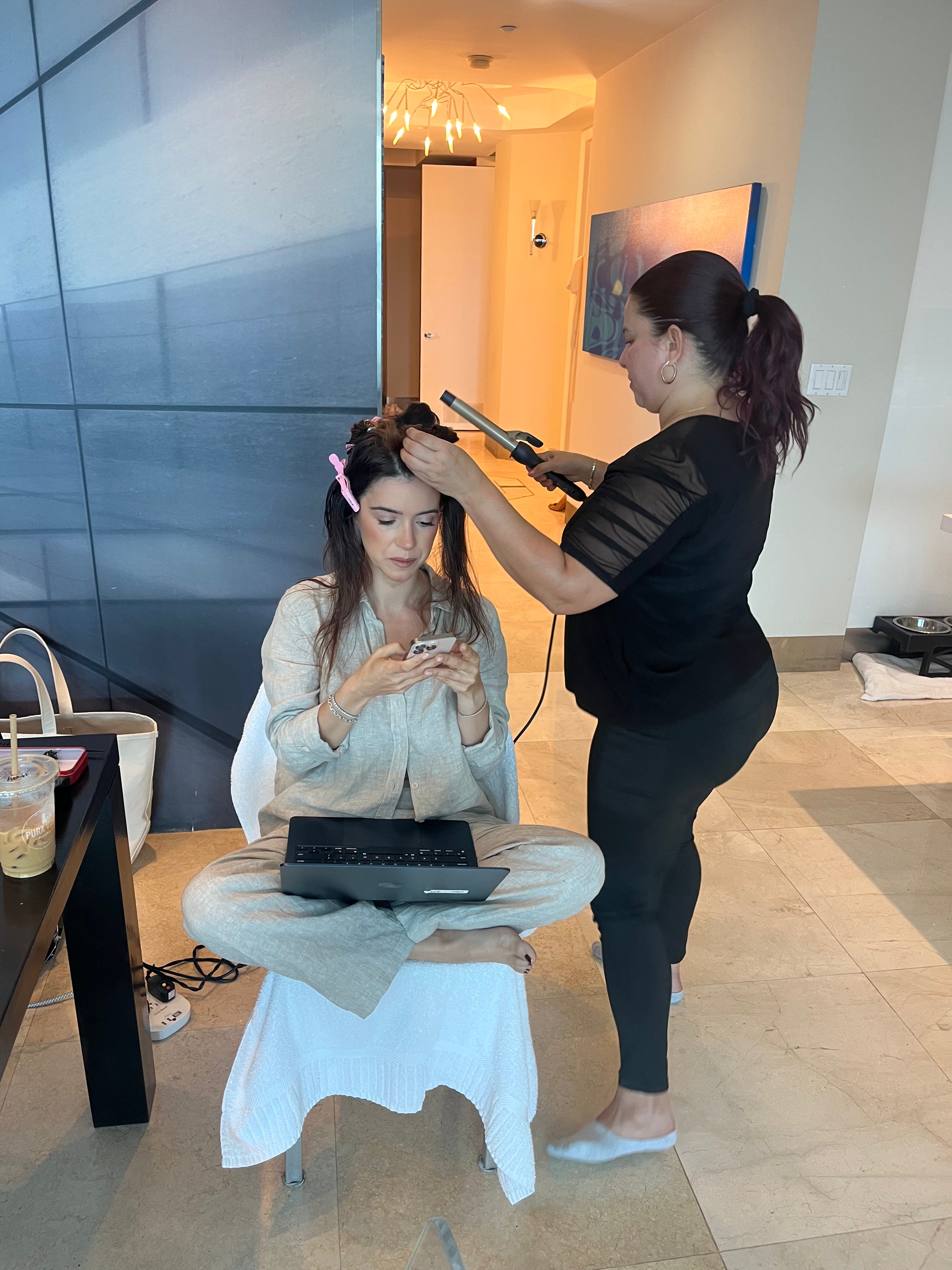
There are so many polished answers you are supposed to give to this question. Find a mentor. Build your network. Know your worth. Advocate for yourself. All true, all useful, all slightly laminated. The kind of advice that sounds excellent in a ballroom and then becomes completely unhelpful when a 22-year-old is sitting on her bed in a towel, hair half-dry, laptop open, wondering whether she should apply for the job she is under-qualified for, take the meeting that scares her, or email the woman she admires.
So I said the thing I actually believe.
Say yes to everything now.
Not forever or in some sort of martyr way. Eventually, you will earn the right to say no. Eventually, discernment becomes the skill. Eventually, your calendar, your energy, your reputation, your nervous system, and your actual life require gates. But in the first few years, before the gates exist, before your name has started traveling through rooms without you, before anyone has decided you are the obvious person to call, you have to say yes more than is convenient.
You have to say yes to the internship. Yes to the meeting. Yes to the weird assignment. Yes to the person who says, “I don’t know if this is interesting to you, but…” Yes to the task with no glamour attached to it. Yes to being useful before you are impressive. Yes to the room you do not yet know how to stand in.
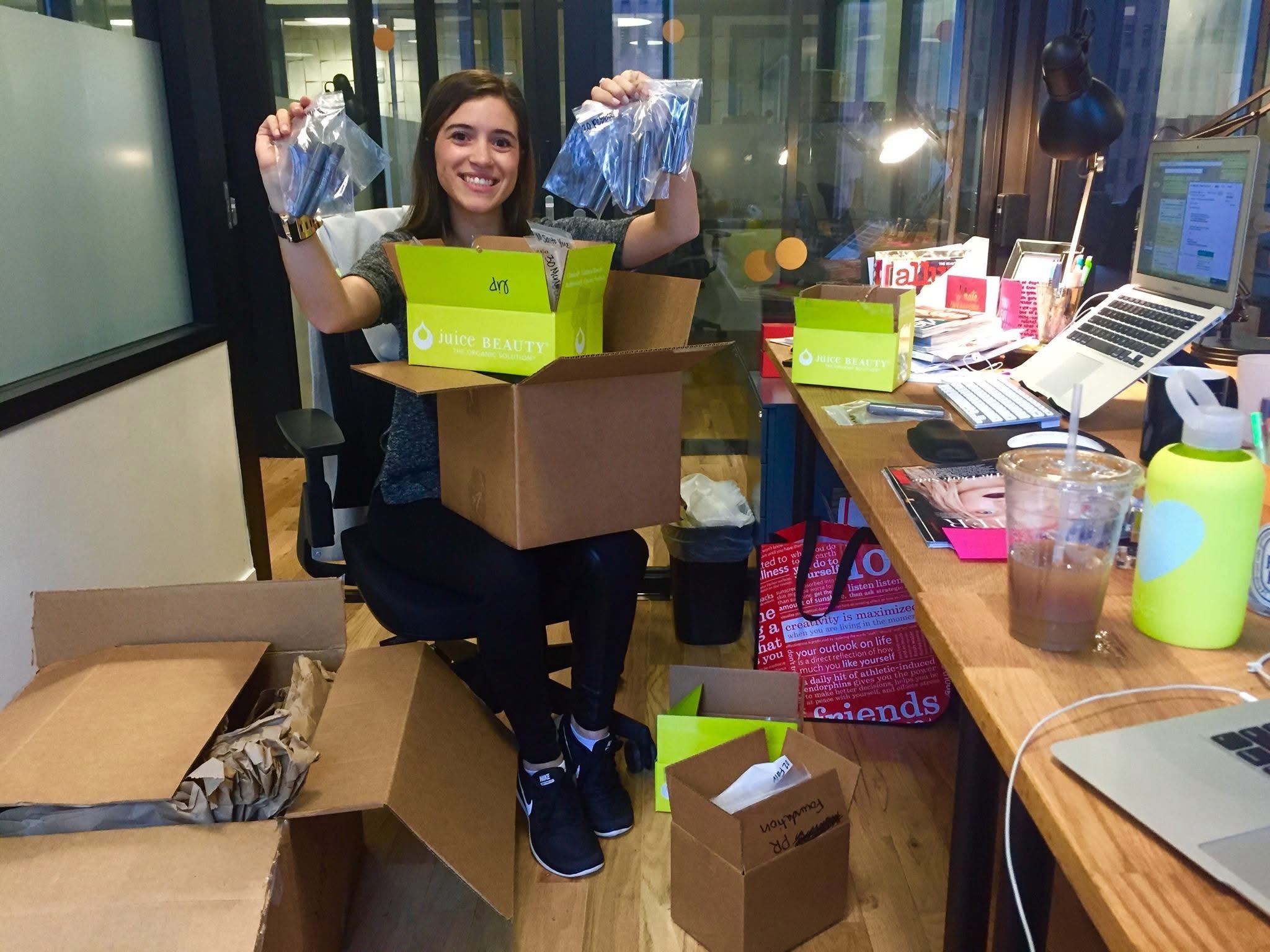
When I was 19, I walked into one of my first internship interviews in New York and said I would take out the trash and sweep the floors. I meant it. I was not performing humility. I was not trying to be the girlboss montage version of myself. I was making a practical calculation. I wanted in. I didn’t yet have enough proof to be precious.
If the way into the room was the front door, fabulous. If the way in was the side door near the trash bags and the printer that always jammed, also fabulous. I wanted proximity, I wanted reps, I wanted to learn the room.
That became one of the defining patterns of my career. I learned to take the outside lane.
The inside lane is obvious. It is the formal application, the perfect title, the tidy role, the prescribed path. It is the version of ambition that looks legitimate from the outside because everyone can understand it. You do the work, you get the grade. You put in the hours, you get paid for the hours. You follow the steps, you move up one rung. There is nothing wrong with the inside lane. There is a lot to be said about being excellent on the obvious path.
But the inside lane is crowded. It’s slow. And it’s full of people waiting for permission to pass.
The outside lane is different. The outside lane is less certain, less polished, and less glamorous. It is the project that does not have a job description yet. The small team at a brand no one’s ever heard of. The meeting you are absolutely not qualified to be sitting in. The messy corner of the room nobody has claimed yet. It’s a lot of flights in coach and a cheap hotel where you shower in flip flops and clorox-wipe the remote.
The outside lane is where the risk looks bigger than it is and the upside is bigger than it looks. It’s where the math gets interesting.
In finance, an asymmetric bet is one where the downside is limited but the upside is disproportionate. A symmetric bet is clean. You put in X and get Y. You work two hours, you get paid for two hours. You follow the rules, you get the predictable result. Linear effort matters. It builds discipline. It builds stamina. It pays rent. We all still need to pay our rent.
But the choices that change your life usually do not have clean math.
A 10% chance at a 100x outcome is a bet worth taking if the downside is survivable. And I’m not talking about lottery tickets, passive income scams, vague manifesting, or “quit your job and sell a course on quitting your job” MLM math. Please. I am talking about the opportunities where the worst-case scenario is discomfort, embarrassment, a few extra hours, a sharper instinct, a new contact, a story, a skill, a lesson. And the best-case scenario is access, trust, reputation, leverage, a new room, a new life.
That is the outside lane.
It’s not reckless and it’s not random. It’s a strategy for people who are willing to be early, useful, and slightly underestimated. There is a line from The Go-Giver that I have always loved because it sounds almost too simple to be useful: your worth is determined by how much more value you give than you take.
For ambitious women, this idea has to be handled carefully. Giving more value does not mean becoming endlessly available. It does not mean becoming the office shock absorber, the girl who says yes because she is afraid to be disliked, or the person everyone hands the invisible work to because they know she will make it beautiful and never complain.
That’s not value. Real value is different. Real value is not, “I will do anything you ask because I hope you choose me.” Real value is, “I understand what matters here, and I can make it better.” Availability drains you. Value compounds. Availability makes you easy to use. Value makes you hard to replace.
When I say say yes to everything now, I do not mean say yes because you are grateful to be breathing the office air. I mean say yes because every early yes is a chance to build evidence. Your brain starts to believe you are capable because you keep giving it proof. You take the meeting, survive the nerves, and your nervous system learns that discomfort is not danger. You try the thing, recover from the awkwardness, and your identity expands by one small rep. This is neuroplasticity in its most practical form: you become the kind of person you repeatedly practice being.
Most people dramatically overestimate the downside of betting on themselves and dramatically underestimate the cost of staying in the safe lane. They think the risk is being told no. Looking stupid. Being under-qualified. Having to start small. Taking the job that does not impress their group chat. Sending the email and not getting a response. Being seen trying.
That’s hardly a risk though, come on? It’s a little knock to our egos sure, but the real risk is optimizing your choices so carefully that you remove all the aliveness from them. The risk of spending the years when you have the most permission to be scrappy pretending you are already above the work that would make you undeniable.
This is where young women get tricked. The internet has given us a very fluent language for boundaries, burnout, red flags, self-worth, and protecting our energy. A lot of that language is necessary. Some of it saved us from performing gratitude while being quietly wrung out. But used too early, it can become a velvet rope around your own development.
A lot of young women are trying to enter their no era before they have built anything worth protecting. I’m not judging, I’m warning.
Your early career is not the season to protect your worth. It is the season to build your weight. To collect evidence. To learn what rooms feel like. To understand how decisions get made. To become useful in a way people remember. To develop taste through proximity, skill through repetition, and confidence through action.
We are told to know our worth, which is correct, sure. But it’s missing a big caveat. Worth is intrinsic. Weight is earned. Worth is the truth that you are valuable as a person. Weight is the professional gravity you build when people know your work holds. You need both. But do not confuse them.
You are worthy on day one, but you are not yet undeniable on day one.
That is what the outside lane teaches you. You become undeniable by building a record of being game.
Game is underrated. Game is the girl who will figure it out. Game is the person who can walk into a room where nothing is clearly defined and somehow leave with a plan, three follow-ups, and the name of the person who actually makes the decision. Game is not desperation. Game is not over-functioning. Game is not having no boundaries. Game is appetite plus competence. It is hunger with a calendar invite. It is ambition with receipts.
And in the beginning, game will beat polish more often than people admit.
At 19, I did not have the most impressive résumé in New York. I had urgency. I had stamina. I had the mildly deranged confidence of someone who believed that if I could get close enough to the room, I could learn the room. I was willing to do the thing that needed doing. I was willing to be underestimated, I was living in the outside lane.
The outside lane rarely looks glamorous. It looks like sweeping the floor, literally or metaphorically, with enough excellence that someone finally realizes you should be handed the keys.
And then, eventually, the math changes.
This is why the biggest asymmetric bet you will ever make is not on a company, an industry, a boss, a trend, or a perfectly timed opportunity.
It is on yourself.
Most people bet on being chosen. They bet on the company to notice. They bet on the boss to sponsor them. They bet on the market to reward them.
Betting on yourself means you stop waiting for the path to look legitimate before you start walking. It means you trust your ability to recover if it fails and expand if it works. It means you understand that the downside of trying is often smaller than your fear has made it, and the downside of not trying is a life built too carefully to surprise you.
Take the meeting. Apply for the role. Send the note. Raise your hand. Offer to help. Move to the city. Take the weird project. Start the thing while it is still a little ugly. Be willing to be early. Be willing to be useful. Be willing to learn in public. Be willing to take the outside lane.
Do not give because you are hoping someone will save you. Give because you are building proof. Give because value compounds. Give because generosity, when paired with discernment and competence, is not a soft skill. It is a career strategy. It is how you become trusted with more.
The worst-case scenario is rarely that you ruin everything. The worst-case scenario is usually that you learn something, meet someone, become sharper, become braver, get a better story, and realize you can survive being seen trying.
The best-case scenario is that one of those yeses changes the entire route.
And then, suddenly, the girl who said she would sweep the floors is sitting under the lights, name on the screen behind her, microphone cord running down her sweater, being asked what advice she would give to young women, and smiling to herself knowing the answer.
Say yes now. Take the outside lane. Build the evidence.
You can say no later.
💌 xo, dk